Death Road Bolivia Bike Tour 2026–2027
Prices, safety, and the honest tips nobody tells you before you book — from someone who's actually ridden the North Yungas Road.
Death Road Bolivia Bike Tour 2026–2027 – Prices, Safety & Tips
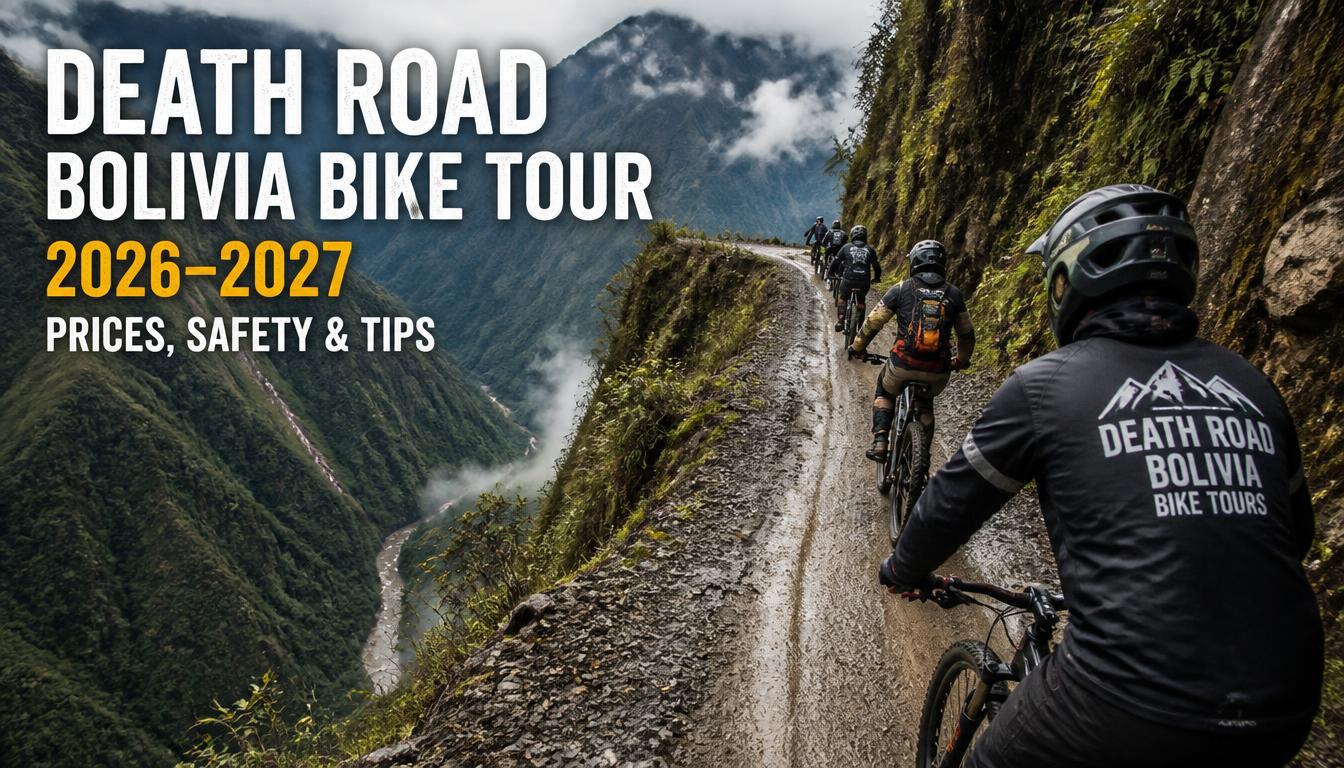
You've seen the photos. Narrow gravel track hugging a cliff, fog rolling in, some guy on a bike looking like he's one wrong turn from disappearing into the Yungas. That's the North Yungas Road, better known as Death Road, and yes — people still ride it. In 2026 and heading into 2027 the tours are busier than ever, the bikes are better, and the prices have nudged up a bit thanks to fuel costs in Bolivia. Here's the real talk on what it actually costs, how safe it is, and what you need to know before you book a death road bolivia bike tour 2026.
The road starts at La Cumbre pass around 4,650–4,700 metres. Cold, thin air, maybe some snow on the peaks. You drop roughly 3,500 metres over about 64 kilometres until you hit the subtropical heat near Yolosa or Coroico. Most of it is downhill. The first stretch is often paved, then it turns into the classic cliff-edge gravel section that made the place famous. Waterfalls cross the road. Cloud forest. Occasional local traffic still uses bits of it, but the heavy trucks and buses moved to the new highway years ago.
What a Death Road Bolivia Bike Tour 2026 Actually Costs
Prices in 2026 sit in a pretty clear range depending on what you're willing to pay for.
| Tier | Price (USD) | What you get |
|---|---|---|
| Budget | $45–85 | Bigger group (15–20 people), older hardtails or basic dual-suspension bikes, one or two guides, basic helmet, simple lunch. Some outfits skip a full support van. Fine if you're experienced and inspect the gear yourself. Risky if you're not. |
| Mid-range | $75–120 | Groups of 8–12, proper dual-suspension bikes with hydraulic disc brakes, two or three guides, a support vehicle that follows the whole way, full-face helmets, pads, gloves, photos included, and a decent lunch. The sweet spot for first-timers and most travellers. |
| Premium | $120–160 | Smaller groups, newest bikes (Gravity Bolivia and a few others still set the bar), three guides, better insurance, buffet lunch, sometimes pool access at the end, professional photos and video. Gravity's tours are often quoted around $145. You're paying for peace of mind and gear that gets maintained after every single ride. |
A few extras show up almost everywhere: the local road/community fee (around 50 bolivianos, roughly $4–5), tips for guides, and optional add-ons like GoPro rental or a zipline. Some operators throw in a "Death Road survivor" T-shirt. Always ask what's included in writing before you hand over money. Street agents in La Paz will push the cheapest deals hard. Walk past them.
🚐 Getting to La Paz: If you're arriving late or want a fixed price from El Alto airport to your hostel before the ride, a pre-booked transfer through Kiwitaxi takes the haggling out of the first night at 4,000 metres.
Is It Still Dangerous in 2026–2027?
The name comes from the old days when this was the main road between La Paz and the Yungas. Estimates of 200–300 deaths a year from vehicle accidents were common before the bypass opened in 2006. That traffic is gone. What's left is a narrow gravel track with big drops and no barriers in places.
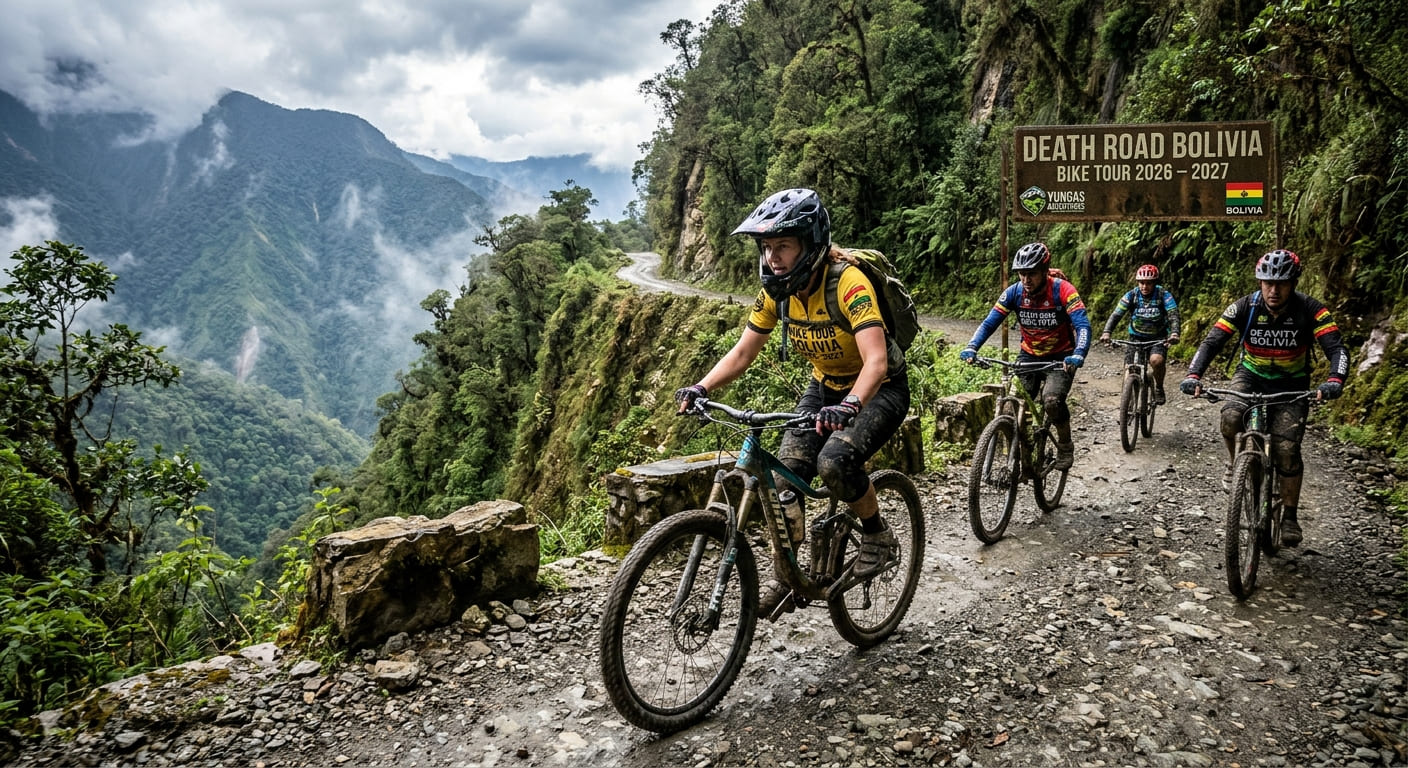
Cyclist fatalities still happen, but they're rare relative to the tens of thousands of descents each year. Serious injuries sit in the low single digits annually across all operators when you dig into the numbers that exist. Most problems come from the same handful of causes: riding too fast, bad brakes, fog or rain making the gravel slippery, or people trying to overtake on blind corners for a better photo. Choose a solid operator and ride within your limits and the risk drops hard.
What actually matters:
- Full-suspension bikes with hydraulic disc brakes that get serviced regularly
- Full-face helmet, gloves, knee and elbow pads as standard, not extras
- At least two guides (lead and sweep) plus a support van that stays with the group
- Clear weather policy and the ability to jump in the van at any point with zero drama
- Guides who speak English well enough to give a proper safety briefing
Gravity Bolivia still gets mentioned most often as the original and the safety benchmark. Vertigo and a few others also score consistently high. Cheap operators cut corners on exactly the things that keep you on the road.
Practical Tips for Your Death Road Bolivia Bike Tour 2026
Dry season (May to October) is the smarter window. Less rain, better visibility. Wet season turns the gravel into a skating rink and the fog can get thick enough that you lose the rider ten metres ahead.
You need basic bike skills. You don't have to be a downhill racer, but if you've never ridden off-road or controlled speed on steep gravel, this isn't the place to learn. Altitude hits some people hard at the start — give yourself a couple of days in La Paz first if you can.
Bring layers. It starts freezing and ends warm and humid. Sunscreen, sunglasses, a change of clothes, insect repellent for the bottom, and cash for the road fee and tips. Most operators provide the protective gear and bikes.
One more thing: listen to the guides. They're not being dramatic when they tell you to keep distance, control your speed, and stay on the inside of the road. The competitive urge to push past slower riders is how most of the remaining accidents happen.
What to book before you go (and what to sort in La Paz)
Most bike tour operators are based in La Paz and you can book the day before at your hostel or through a reputable agency in the city centre. If you'd rather have the logistics locked in before you fly — especially in high season (June–September) — it's worth checking what's available online first. Some multi-day Bolivia routes that include the Death Road as a day trip show up on YouTravel, and city experiences around La Paz (cable cars, Valley of the Moon, city tours) can be pre-booked through Tiqets if you want tickets sorted before arrival.
For the ride itself, my advice is the same as for anything in Bolivia: don't book the absolute cheapest. The mid or premium tier is where the safety margin lives, and you'll feel the difference on the gravel.
📱 Staying connected on the road: Signal is patchy in the Yungas, but an eSIM installed before you fly means you're not hunting for a SIM shop on day one. Airalo has Bolivia packages that activate on landing.
FAQ — Death Road Bolivia Bike Tour 2026
How much does a Death Road bike tour cost in 2026? Budget tours run $45–85, mid-range $75–120, premium $120–160. Add ~$5 for the local road fee and tips.
Is the Death Road bike tour safe? It's as safe as the operator you choose. Full-suspension bikes, full-face helmets, two guides plus a support van, and riding within your limits are what matter. Fatalities are rare relative to the tens of thousands of descents each year, but they do happen — mostly from speed and bad brakes.
When is the best time to ride Death Road? Dry season, May to October. Less rain, better visibility. Wet season (November–April) makes the gravel slippery and the fog thick.
Do I need experience to ride Death Road? Basic bike skills, yes. You don't need to be a downhill racer, but you should be comfortable controlling speed on steep gravel. If you've never ridden off-road, this isn't the place to learn.
How long does the Death Road tour take? A full day. Pickup around 7 am in La Paz, back between 6 and 9 pm. Some people stay overnight in Coroico instead.
What should I bring on the Death Road bike tour? Layers (it starts cold and ends hot), sunscreen, sunglasses, a change of clothes, insect repellent, cash for the road fee and tips. Most operators provide bikes, helmets, pads, and gloves.
Which operator is best for Death Road? Gravity Bolivia is the original and the safety benchmark. Vertigo and a few others score consistently high. Avoid the cheapest street deals — they cut corners on bikes and support.
Can I book Death Road online before I arrive? Yes — some multi-day Bolivia tours that include Death Road are listed on YouTravel, and city experiences can be booked through Tiqets. But most bike-specific tours are easiest to book in La Paz a day or two ahead.
A death road bolivia bike tour 2026 is still one of the more intense day trips you can do out of La Paz. The scenery shifts from high Andes to cloud forest to jungle in a few hours. The adrenaline is real. The danger is real but manageable if you pick the right company and don't try to be a hero. Book the mid or premium tier, check the bikes yourself if you're the type who likes to, and enjoy the drop. Just keep your speed in check when the edge appears.
If you're planning your route and want to know how Death Road fits into a bigger Bolivia itinerary — or whether it's worth it versus quieter Yungas roads — ask. I'll give you the honest answer.
Safe roads. Keep the altiplano in your lungs.