La Paz Cable Car Guide 2026–2027
Mi Teleférico — the world's highest urban cable car system. Routes, prices, and the lines that actually matter for the best views in La Paz.
La Paz Cable Car Guide 2026–2027 – Routes & Best Viewpoints
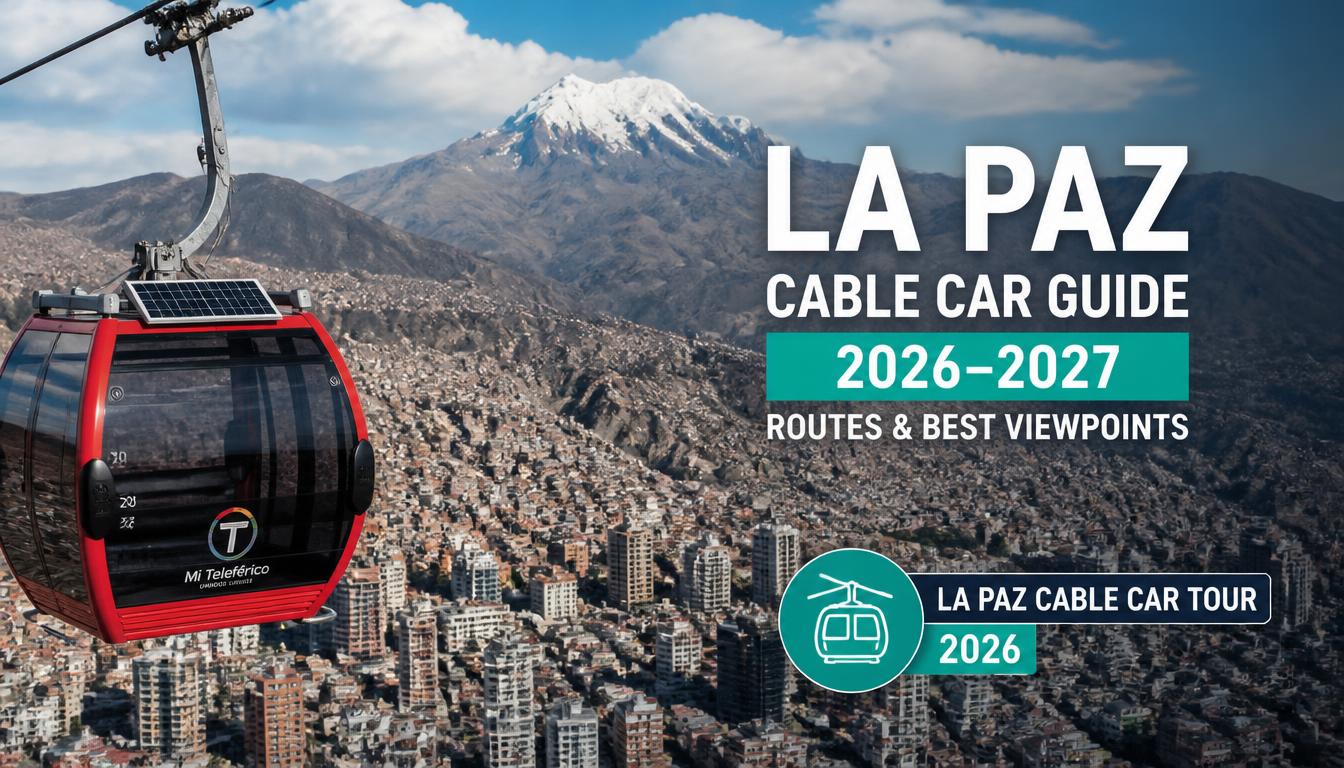
Mi Teleférico is the world's highest and longest urban cable car system. Ten colour-coded lines, 26 stations, cabins every twelve seconds. It's public transport that happens to deliver the best views in the city. If you're planning a la paz cable car tour 2026, this is the one that actually delivers.
A single line costs Bs 3. Every transfer is another Bs 2. Students, over-60s and people with disabilities pay half. No day pass needed for most visitors. You buy at the station machines or windows with cash (bolivianos). Cabins hold ten. Locals pack them tight during rush hour.
Hours run 06:30–22:30 most days, 07:00–21:00 on Sundays and holidays. Individual lines close for maintenance now and then, so check the boards or the official site if you're chasing a specific route.
The Lines That Matter for Views
Red Line (Línea Roja)
Estación Central to 16 de Julio in El Alto. About 11 minutes. This is the classic first ride. You climb straight out of the canyon and the whole city bowl opens behind you. Sit facing backwards if you can. Best for the dramatic reveal.
Yellow Line (Línea Amarilla)
Mirador (El Alto) down to Libertador in Sopocachi. Roughly 17 minutes. Most people call this the prettiest. You drop past the hillside neighbourhoods with Illimani framed ahead on clear mornings. Downhill is better for the views.
Green Line (Línea Verde)
Continues from Libertador into Zona Sur toward Irpavi. Another 16 minutes of descent and mountain views on a clear day.
Silver / Plateada
Connects 16 de Julio to Mirador across El Alto. Useful link if you're stringing the Red and Yellow together.
The other lines (Blue, Orange, White, Light Blue, Purple, Brown) are more functional. Useful for getting around, less about the scenery.
A Simple Scenic Route for 2026
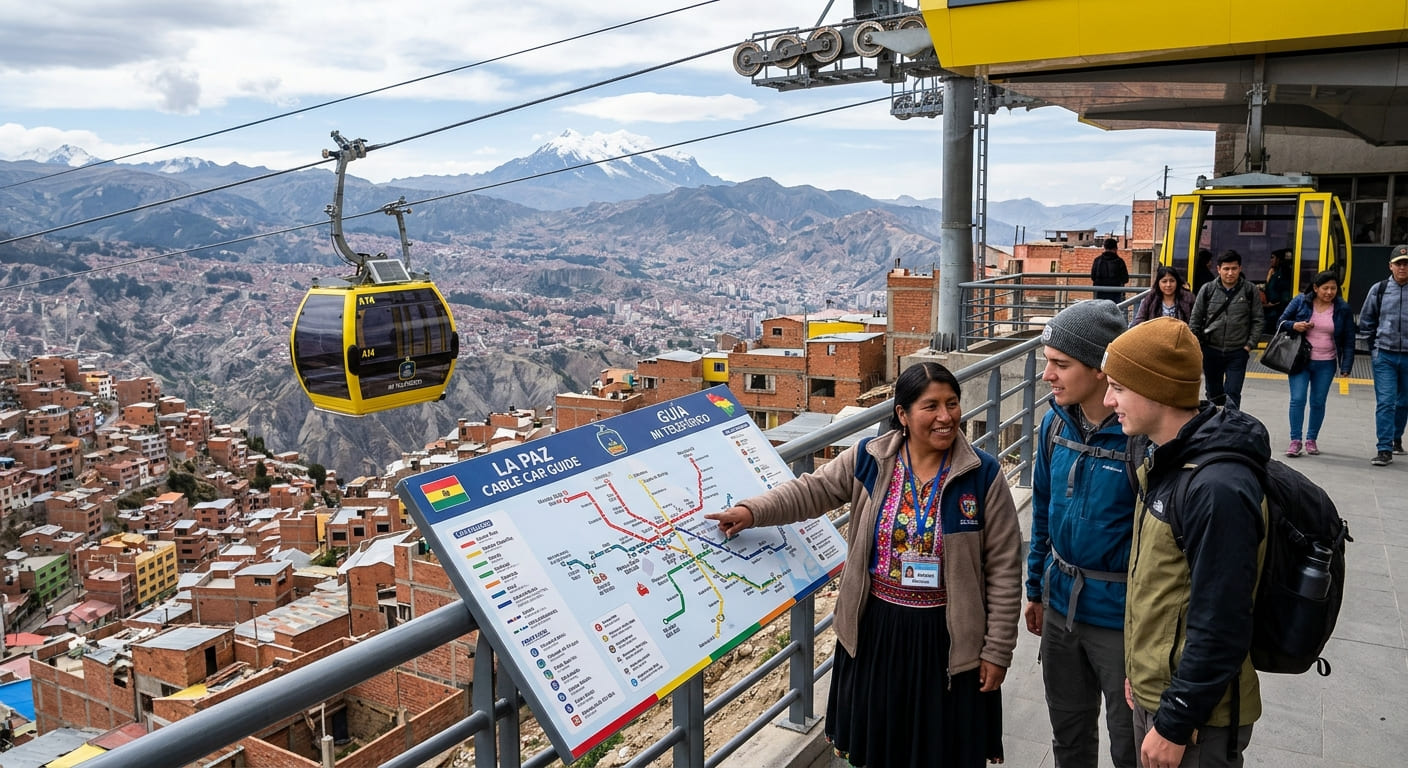
- Start at Estación Central (Red Line) and ride up to 16 de Julio.
- Transfer to Silver and cross to Mirador.
- Drop down the Yellow Line to Libertador.
- Optional: continue on Green into Zona Sur.
That loop costs around Bs 9 and takes maybe an hour of actual riding. You cross from the high plateau of El Alto down into the southern valleys. Cheapest sightseeing in Bolivia, hands down.
Morning light is cleaner for Illimani. Late afternoon turns golden but clouds often build in the wet season. Sunset from the top of the Red Line or from Mirador station hits hard if the weather plays nice.
Best Viewpoints Tied to the Network
The cabins themselves are the moving viewpoint. Glass pods floating over rooftops and canyons.
- Mirador station (Yellow/Silver) puts you on the rim of El Alto. Walk a few minutes for wider shots of the city with the Cordillera Real behind it.
- Libertador and Sopocachi stations give solid mid-level city views.
- Killi Killi mirador isn't directly on the lines but easy to reach after a ride. Free, nearly 360 degrees, Illimani in the background. Classic sunset spot.
- Some people get off near 16 de Julio and walk to informal viewpoints on the edge of El Alto. Do it in daylight.
Practical Bits
Stations are modern and signed in Spanish and Aymara. Transfers happen inside without going outside. Staff fill cabins fast — don't hover on the yellow line.
Altitude hits harder higher up. El Alto sits around 4,000 m. Take it slow on your first day.
Carry small bills. The machines can be fussy with big notes.
No food or big bags inside the cabins. Phones and cameras are fine — the windows are clean enough for decent shots if you wipe the glass first.
Rush hours (roughly 7–9 am and 5–8 pm) get crowded with workers. Mid-morning or early afternoon feels calmer.
🚐 Getting to La Paz: If you're arriving at El Alto airport and want a fixed price to your hostel without haggling at 4,000 metres, a pre-booked transfer through Kiwitaxi is the least stressful option on day one.
🎟️ Other La Paz experiences: If you want city tours, Valley of the Moon, or Cholita wrestling tickets sorted before you arrive, check what's available on Tiqets. For multi-day Bolivia routes that include La Paz, YouTravel lists several options.
📱 Staying connected: If you land late or don't want to hunt for a SIM shop, an eSIM installed before you fly is the easiest way. Airalo has Bolivia packages that activate on landing.
FAQ — La Paz Cable Car 2026
How much does the La Paz cable car cost? Bs 3 per line, Bs 2 per transfer. Students, over-60s and people with disabilities pay half. No day pass needed for most visitors.
What are the cable car hours? 06:30–22:30 most days, 07:00–21:00 on Sundays and holidays. Individual lines close for maintenance occasionally.
Which cable car line has the best views? The Red Line (Estación Central to 16 de Julio) for the dramatic reveal, and the Yellow Line (Mirador to Libertador) for the prettiest descent with Illimani framed ahead.
Do I need a guide for the La Paz cable car tour? No. Just buy tickets at the station and ride. The Red → Silver → Yellow → Green loop costs around Bs 9 and takes about an hour.
Is the cable car safe at altitude? Yes. El Alto sits around 4,000 m, so take it slow on your first day. The cabins are enclosed and modern, signed in Spanish and Aymara.
When is the best time to ride? Morning light is cleaner for Illimani. Late afternoon turns golden but clouds often build in the wet season. Mid-morning or early afternoon avoids rush-hour crowds.
A la paz cable car tour 2026 doesn't need a guide or a fancy package. Just buy the tickets, pick the Red and Yellow, and ride. The city spreads out below you like a map someone dropped into a canyon. Do it early in your stay while the altitude is still settling. You'll understand the layout of La Paz better than any walking tour can show you.
If you're planning your route and want to know how the cable car fits into a bigger La Paz itinerary — or where to watch sunset without the crowds — ask. I'll give you the honest answer.
Safe rides. Keep the altiplano in your lungs.